Wednesday, November 27, 2013

Episode 80: Granda and Sandshoes!


Picture
This past Saturday was the day of True Awesomeness, where the Aces got together to watch the Doctor Who 50th Anniversary Special, the Day of the Doctor, AND the final episode of this season of The Legend of Korra! We're joined by Stephanie and Mae Linh to break down what we loved and didn't love so much about both. It's an extra-discussion-filled episode, folks!
 

Friday, November 22, 2013

What is Worse than Finding a Worm in your Apple? - By Jarys


  The answer is, of course, "the Holocaust". 
     Weren't expecting that? But did you find it funny? If you did, I am guessing you either expected to hear a far more traditional punchline or you are a connoisseur of "anti-jokes". Anti-jokes purposefully hijack old and tired jokes, and present unexpected (and often straight faced) punchlines instead. I became a big fan of these jokes in college and when I discovered the Pattern Recognition theory of humor, I finally figured out why. This theory, produced by Alastair Clarke, suggests that we find different phenomena funny (like the word "phenomena", it reminds me of the Mah Nà Mah Nà song performed by Muppets) because the "Ha Ha" action in our brain is another version of the "Aha!" action. The brain, it is theorized, is mostly a pattern creating and recognizing organ, and we are evolutionarily predisposed to feel pleasure when a pattern is recognized. Humor, the theory states, works when our minds make the connection proffered by the joke, or identify the pattern the joke purposefully breaks. 

     Example: A traditional joke asks "What is black and white and red all over?" to which eight year old Jarys would have answered "A newspaper". The joke here cements the homophonic connection of "red" and "read". Once our brains realize that this connection is being called upon, the pattern is complete and we feel the humor. Conversely, look at the joke with which I opened my part in this dialogue "What's worse than finding a worm in your apple?" Tradition dictates that discovering a mere portion of a worm ( alluded to be bitten through) to be the obvious answer. Instead the joke becomes quite serious, offering the extremely and decidedly worse (one hopes, but know your audience) "the Holocaust". This break in the assumed pattern not only points out the pattern to the listener, but offers a new pattern: by worse, the joker meant.....MUCH worse. 

Muppet break!


     I like this theory because it is so married with cognitive theory and because it offers a very simple and unemotional answer as to why we find things funny. Humor is mechanical, an unconscious but important process that can be trained by stressing or de-stressing certain patterns.People who do not think in pattern A will not find jokes that rely on pattern A funny. People who do not wish to see pattern A perpetuated in public will not respond well to jokes that highlight that pattern. The theory separates theory from "should be funny" to recognizing that what "is funny" to be highly personal, with the best performing jokes supposedly ones that rely on the most universal patterns.  This theory doesn't tell us why certain jokes are funny to some people and offensive to others, it leaves that question to psychology. Some people's experience have ingrained certain patterns as threatening, while others see them as benign. 

     This is addressed in the article published by Alexis George for this blog last week. In that article she criticized Mike Fatum's article on humor for depicting funny as a value judgment. In that article, Mike asserted that some subjects were funny and some were not. He distinguished offensive material or offensive jokes as "not funny", when the audience has a legitimate reason for being offended. He called upon comedians to make that distinction. Alexis responded by arguing humor as a personal and subjective experience, which society could neither legitimately police nor criticize. Alexis argues against criticizing humor as too offensive, or comedians as bullies thusly: 

"      But to eliminate the freedom to express, to stifle the human need to process through creation of humor, to discredit a human as a bully or an indecent human for attempting to approach and cope with tragedy in their own messed up human way is is so much more dangerous than any joke could ever be.

Besides, if a joke isn't resonating with you, you absolutely have the right to tune it out.." Let's talk about Humor - Alexis George

I know I F-ed that up. Not sure how.
     Mike began a dialogue, an important one, I would say, and Alexis continued it. I'll attempt to continue it further, but I must take issue with both my fellow bloggers' articles. Both made important points, Mike did when he pointed out that some jokes have destructive potential and can harm their audiences. Alexis dissected two essential theories of humor that reflected on Mike's views while pointing out what Mike had missed. Chief among these is that humor is personal.

     Alexis is right, humor, in that what we react to by finding it humorous, is personal. So personal that society has no legitimate reason to shame us for what we find funny. On that, Alexis and I agree. But I think that Mike's point can be clarified to where both writers share some truth: Mike says "funny" in his criticism of offensive humor, when he could have said "unacceptable." Did he mean "unacceptable"? Look, we're close, but I am not a Mike whisperer, he may say that wasn't his intention at all.  But if he had put his criticism in those terms (objectionably, repugnant, unsuitable), I would have agreed with him. These terms are just as subjective as humor is, acknowledging in an audience their own personal reactions to a joke, but they deal with a far less subjective matter: the social context in which jokes are made. 

     What you find funny is between you and your super ego, but what you do and say in public (such as anywhere on the internet) are just that: public. What is public is not a subjective experience, but a communal one, a construct created by the input of all involved. The things we joke about in public have consequences beyond our own personal enjoyment and these jokes often have consequences beyond the  reactions of our audience, depending on how word of mouth goes. Certain subjects hurt certain people, certain destructive patterns propagated through speech (such as bigoted conceits) strengthen that pattern. I wish Mike had distinguished between "Punching Up" and "Punching down", comedic terms that refer to using jokes to attack groups more powerful than you and using jokes to attack those less powerful than you. This dynamic may have made his point more clear (if only to me). By way of example, when the comedian Tosh suggested it would be funny if the woman in his audience (who had heckled his rape jokes as inappropriate) were raped right then and there, he was punching DOWN. It's perfectly fine to find that joke funny. Go ahead and laugh to yourself, I'll support you in your private right to find whatever you find funny, funny.  But laughing out loud or repeating the joke is not private. There you have an audience.

I'm sorry, am I making it hard to laugh at the fox joke?
     If I agree with Mike on anything, comedians should be aware of their audience, and I would further that by saying comedians should be aware of as much of the social context of their joke that they can be. Comedians ignorant of these factors are not the only ones who will fall subject to critique. They will, and I find nothing objectionable about that.

     This is because EVERYONE, or at least everyone in a social setting, is subject to critique. I have seen a lot of critique of critique (ironic, I know) in which critique is depicted as the enemy of free speech and almost every such critic fails to recognize that critique is also form of speech. Critique is a social means through which we point out what views we find unacceptable to air in different public arenas. Critique is how we point out that an argument is objectionable and not to be wholly accepted without consideration. Critique may be used to show our disgust of "bad" art. Most importantly, critique is how we, the ever democratic mob, slowly evolve and adapt our ideas of what is suitable and unsuitable, when and where and with whom. Critique is many things, but what critique is NOT is censorship. 

     I disagree with Alexis on her critique of Mike's critique and the subject of critiquing jokes as unacceptable, unsuitable, or even bullying. Voicing objection does not silence speech (despite  24 hour news' fun with microphones to adjust who is being heard in yelling matches...I mean panels), critique adds a differing view. There are ways that critique can be enhanced through legislation, authority, coercive enforcement, or social pressure that are stifling, but critique by itself does not have that power. When a joke offends someone, they need not tune it out. They can speak up, and have every right to. During a comedy show is not usually the place to do that (though Michael Richard's racist rant in a comedy show absolutely deserved the counter voices the audience gave, I believe) as the people on stage are performing. Such a show is a situation in which critics, noting their "audience" and social context, might wait and post something nasty online later. 

     
      What I like about the Pattern Recognition theory of humor is that it doesn't say what is funny or what is not funny, the theory just describes how we come to experience "funny". That "aha" from "haha" is a moment of realization, and with all such enlightenment, a punchline can bring catharsis. Here comedians and artists can bring healing to a situation, by allowing us to conquer our fear, master the trauma, and see the pattern that haunts us for what it really is: a mental construct held in the mind and reflected through social interaction. But one person's panacea is a another person's poison, comedians who are not aware of their audience and how that audience processes the pattern they want to light upon may find themselves doing more harm than good.

And the audience may respond in kind, utilizing the same freedoms to speak that the comedian did. 

Thursday, November 21, 2013

Nerd Party!: How to Plan a Geeky Party for You and Your Friends, by Stephanie Cala

Yes, yes, you read correctly, NERD PARTY.  However, for non-nerds, there will still be lessons you can take away from this post, I promise (:

I've thrown a couple of parties over the past few years.  I'm currently studying to be an event planner, but until I start planning events on a larger scale I've used a lot of my ample time coming up with ideas for parties I could throw in my own home.  I LOVE throwing parties.  I will hunt down excuses to throw parties.   If I find a recipe I like that works great for a party, I will throw together a potluck game night party where I get a chance to finally make that recipe.  If I find a decorative centerpiece or some new linens that absolutely NEED to be shown off, I will make it happen.

Sometimes though....I'll save a bunch of ideas and release them into the world all at once.  For example: my 22nd birthday was a generic nerd party.  I had a TARDIS cake, Pokeball cookies, a Pinkie Pizza Pie and Skywalker Smoothies with HP and Mana potions to boot.  When I party, I party hard, and I have no problem nerding out.


But, birthdays only come around once a year (unless you're like me and throw half-birthday parties, or birthday parties for your pets, or......*cough* you get the idea).  Another great excuse to throw a party, which has become increasingly popular over the past several years is to throw a viewing party--likely for a season premiere or a season finale.

So let's say that there's a big show having a big special event happen and you want to celebrate it by throwing a party?  What do you do?  Where do you begin?

If only we could all be so lucky to have party cannons.

Well, let's take this one step at a time.  If you're taking on the role of an event planner, what is expected of you and what are your responsibilities?  And how do you define what an event planner actually is?

An excerpt from my notes on meeting planning:
Event/Meeting planners are responsible for planning and coordinating the wide variety of activities needed to produce meetings and related events.  They coordinate every aspect of a meeting, including securing the location, acquiring entertainment, and arranging for materials, food and beverage, and other equipment.  Although there are several kinds of event planners and meeting planners, the exact nature of the job will vary depending on the organization you work for or are helping to plan for.  

Since we're talking about a purely social party and you're in charge of a lot of variables, this can potentially make things easier.  Below I've outlined a step-by-step process for planning a party or an event.

  1. Find a venue.  Consider sleeping situations, public transit options, exhibit/meeting space available, F&B, A/V, etc.  
  2. Arrange for support services, coordinate with the facility, prep your staff, and make sure that if you need any supplies that you have a plan for obtaining them (including F&B)
  3. Post-Party: often, your planning doesn't stop after the event is over.  You need to take a look back and see what worked, what didn't work, and how you can make the event better next time (if there will be a next time).


I know that sounds confusing, but lemme break it down for you.

I'm planning a tv-party this weekend, so I'll use my party as an example for the above.
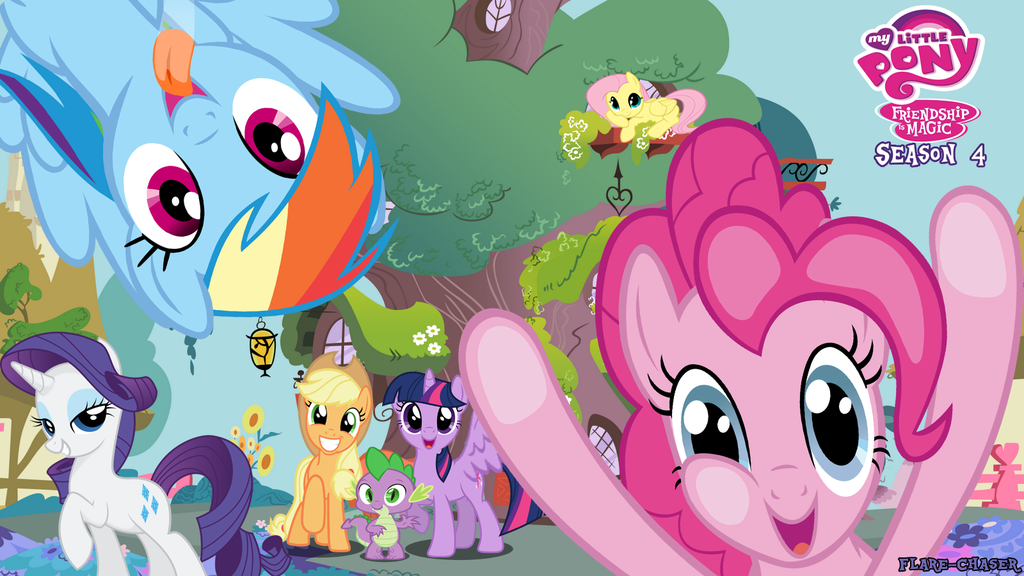


My party this weekend will celebrate the 50th anniversary of Doctor Who, the season four premiere of My Little Pony: Friendship is Magic, and the season two finale of the Legend of Korra.  There will be 5-7 of my friends in attendance, and some of them are vegetarian.


  1. Find a venue - my home.  Nobody will be sleeping over, transit may be a problem because several people in attendance live 20+ miles away, we will primarily be using the living room for tv-viewing and socializing, I will have to put together a menu and cook day-before and day-of, and I have a DVR that will have recorded all of the shows we'll be watching.  
  2. Arrange for services - talked with my parents and had the party approved on the condition that they don't have to clean it up.  I've put together a menu taking into account dietary restrictions, and have made a shopping list for my grocery store run on Friday.  I also might have my best friend in tow who can double as my sous chef while I'm cooking.  
  3. Post-Party: if a particular item of food got cleared off the plate in a matter of minutes, it's probably a good item to bring back for other parties.  If there was something that hardly anyone touched, then I'll know for next time to not make as much or any at all.  Did any of the decorations break down or get destroyed?  Did any of the furniture cause a hindrance to guests?  These are all questions I'll have to answer after the party finishes.

Once you've figured out most of the big picture stuff, you can begin working on the small (but still important) stuff; ie. figuring out your budget, putting together a menu, getting a final guest count, etc.

A week or more away until your party...


Budgeting is something that you should take into consideration early on in your planning stages.  If you've got income to spare and you wanna go full-out, then I dig it.  Buy yourself a giant balloon archway for guests to walk through, a photobooth with a cardboard cutout of your favorite celebrity, a couple of fresh floral arrangements and linens to match, GO FOR IT (and invite me, I'd love to see it all).  Just make sure you have enough time to make it all happen.

However, if you're like me and don't have a lot of money to spend, you've gotta make sure you set a limit and make sure that your party can be done with the budget allotted.  You could do what I sometimes do and put together a BEO - banquet event order.  This is a fancy industry-term for an all-inclusive, line-item, shopping list.

Example:

Item                               Quantity                        Price (per piece)         Total Price
Safeway Pork Buns         1 bag (8 pieces)                  $6.99                                 $6.99
Shrimp Gyoza                 2 boxes (6 pieces per)         $5.99                                 $11.98
Hoisin Sauce                   2 jars                                $4.99                                 $9.98

You get the idea.  It helps keep my expectations more realistic.  It's also useful to be able to see a print-out of everything you're buying in case you need to cut back on a few things.  Luckily, in my case, I don't have to pay for A/V equipment and I don't have to pay for a venue, so I can spend a huge amount of my budget on food and beverages.  I'm a HUGE foodie, so I have no problem spending a little more on better products.  The food you serve can make or break a party.

Speaking of food and beverages.......

food is the best thing ever

A few days out...


A really good time to start finalizing your menu is about three days away from the party.  This will give you ample time to go grocery shopping, and if the store doesn't have something you need then you still have time to shop elsewhere or wait for them to restock the following day.  This also applies to corporate meetings at venues that are covering F&B - the chefs will usually have a final menu for your event about three days out once you've confirmed a head count.  Be sure to take into consideration any allergies or dietary restrictions that your guests may have and pass this info along to the correct people.
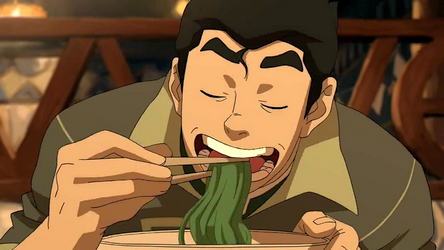
For example: I know that for the Legend of Korra portion of my party I'll be serving Asian cuisine.  I wanted to start out with a pork bun appetizer, hoisin chicken over noodles for the main dish, and then small cakes for dessert.  Looking back over my menu, I realized that I didn't have any vegetarian (more precisely, pescetarian) options for this portion of the party.  I had to go back and rework some food options, adding shrimp gyoza to the list of appetizers, and then budgeting appropriately so I can get a nice salmon fillet added in for the main dish so my pescetarian friends don't have to eat celery and dip all party long.

I had originally thought of making soba or ramen, but it's very difficult to make massive amounts of it at a time.  I switched over to hoisin chicken (and a bit of salmon) which is fantastic because I can cook a dozen pieces in the oven all at once, and there's little work involved.  Brainstorm what's going to be easy to cook as well as what's going to be easy to clean up!  


Fun tip: If you're going to be baking goodies, you can cut down your cooking time day-of by cooking them the day before.  This'll give you more time to mingle with guests, and it'll also free up your cooking appliances for other food that needs to be cooked day-of.  Just throw the goodies in the oven a few minutes before serving to warm them back up again, and your guests will never be the wiser! (;

The day before your party...


The day before your party is primarily spent running around like a chicken with its head cut off.  


I KID, I KID; DO NOT FREAK OUT. 

 In most cases there aren't a whole lot of things you will be able to do the day before.  Best case scenario you can start putting up decorations and start cooking some of your goodies for the next day.  Casually check in with guests and remind them what time is a good time to arrive, and (gently) remind them to bring anything if they're supposed to.  If you have a larger party with big installations happening like a balloon arch or a photobooth, then it's totally okay to call up the company and touch-base with them to go over final details.  

I speak chopenese, do you?!

If you're into making timelines, then today would also be a good day to put one together.  It can be as simple as: 
11:00 Doctor Who
2:00 Guests show up
2:30 My Little Pony
3:00 Games
5:00 LoK
6:30 End

Or it can be as detailed as a BEO:

9:15am: Wake up and shower
9:45am: Leave to pick up guests to go to theater
10:15am: Arrive at theater, stand in line (likely outside) and hope it isn't raining
10:47am: Get text message from someone about not catching the train because of the rain
10:58am: After scrambling around to find them a ride, they text you back and they're magically back on schedule
11:15am: More rain?  More rain. 
11:25am: Theater folks were nice enough to finally let us into the theater
11:50am: Doctor Who 
12:30pm: Leave theater in awe or in disgust - feels pending
1:15pm: Arrive at home and begin cooking 

etc

My sincerest recommendation if you prefer drafting the latter kind of schedule: please don't try to get things down to the minute.  I've seen wedding planners pull their hair out because the maid of honor took an extra 13 seconds in the bathroom so now the whole wedding is like 2 minutes behind schedule.  Trying to micro-manage like that will stress you out.


PARTY DAY!

Get cooking


Keep calm
Don't do this.

Have fun - it's a party!
Please, not so much you end up butt-nekkid.


Be sure to eat something!


After cleaning up, pat yourself on the back and go rest - you threw an awesome party.


If you liked this blog entry and want more, please let us know!  If you have other party ideas, questions, comments, or concerns be sure to leave a comment below.


Tuesday, November 19, 2013

The Day the Doctor Taught Me About Being a Hero

This Saturday, the longest running science fiction television show in history celebrates fifty years with a simulcast of a single episode around the world. At the same time, people in countries everywhere are going to gather around their televisions or at their local movie theaters to watch The Day of the Doctor, and celebrate a show that has come to define multiple generations. Over the fifty years, there have been 11, soon to be 12 and 13 men (unfortunately, all of them white) to play the Doctor, and everyone has their story of their first - the incarnation of the Time Lord that would forever be Their Doctor.

For most of the new fans, this is David Tennant, who triumphantly returns this Saturday. For others, it's the newest incarnation, Matt Smith, or the sadly-only-on-for-one-season Christopher Eccleston. And I've met fans who go far back enough to have Tom Baker, the fourth doctor, or even William Hartnell, the First Doctor, as their own personal Doctor. But for me, the story starts at a very strange time in the Doctor's life - when he wasn't on TV anymore.

From 1987 to 2005, the show was simply not on the air. Having been axed for poor ratings in the late eighties, and despite numerous attempts to bring it back, the thirtieth anniversary of Doctor Who passed with no return to form other than a half-cocked crossover with the soap opera Eastenders. Many fans believed the show would never come back, and certainly until the early 2000s and Russel T. Davies, that was the only logical conclusion. Except...

In 1996, I was living just south of London. I had heard of Doctor Who, and even been to an exhibit at the Museum of Moving Image about the show, but it had all seemed such utter cheese. A robot dog, bad guys that looked like trash cans - in my unknowing mind, the show had been cancelled in 1968. I had no knowledge of who the Doctor was, or why I should care.

Yeah, I know, it's classic, but come on, guys.


At the same time, I'd been in the midst of a long running argument with my darling Mother. It had began when we were watching the "classic" John Travolta and Christian Slater film Broken Arrow. My mom's not big on violence, and not happy that I was pretty into violent movies. As we reached the climax of Broken Arrow's...I guess I can call it a plot...the heroes got into a fist fight in the back of a stealth plane that was clearly going to lead into someone dying horribly. My Mom was complaining about how unnecessary it all was - and talking over the movie's scant dialogue. Now, if you know me, one of the greatest sins in my mind is talking during a movie or television show's dialogue. I have enough trouble hearing it already, without additional background noise. So, I decided to respond in a mature fashion, and yell, "MOM, I LIKE IT, OK?" at the top of my lungs.

This choice did not go well for me.

Months later, we were huddled around our television set, exchewing the usual night's viewings of Frasier and Sienfeld, for this new program my Mom thought I would like. It was called "Doctor Who," and was an American television movie based off of the old British TV show.

Now, some of you are familiar with this film, but for those of you that aren't, here's a quick background. In 1996, Fox decided they wanted to try their hand at bringing Doctor Who back. They wanted, initially, to create a brand new American show based on the British idea, but a producer on the project somehow managed to convince them to make it a continuation of the previous British version. They produced a television movie that was meant to be a backdoor pilot - when it was a smashing success, they would make a new TV show.

The fact that there was no new Doctor Who for another ten years should tell you how that went.

Still, as an impressionable child, watching the Eighth Doctor, Paul McGann, stride across the screen was a treat, and I was glued to the set the entire time. I loved the cavernous TARDIS interior, with its Victorian stylings, I loved the modern setting with its slight air of darkness (gang wars breaking out in the street, for example), and I loved the Doctor.


Paul McGann's Doctor was a different sort of hero than any I'd experienced before. He didn't fight his way out, like the Turtles or He-man, he thought his way out. He had an impeccable moral character, and was incredibly dashing. If you'd put a sword in his hand he would have been perfect for me - although now I know the Doctor would hate using any kind of weapon, even a sword. (Except for Tennant that one time, but we'll forgive him.)

During the end of the movie, the absolute cheese-ball Master played by Eric Roberts is being sucked into the Eye of Harmony, an exploding star that powers the TARDIS. He's just killed two people the Doctor clearly cares about, not to mention murdered millions more over time. He's so bad that the Daleks had him executed for being too dangerous.

It's much scarier than it looks, I promise.

And still - the Doctor climbs onto the side of the Eye and stretches out his hand to save him.

It was at this point that my Mom decided to resume the argument, turn to me and say "See? That's what a hero is."

But the thing is - she was right. And even my prideful young self could do nothing more than nod, dumbfounded at how simply awesome this character was.

While the moment stuck with me forever, the specifics didn't come back to me until the series relaunched, and my Other Doctor, Christopher Eccleston, got me back into the show. At that point, memory tugging at me, I went back and watched the TV special again. And it's wonderfully terrible at points, but the thing that shines through, still, is Paul McGann's beautiful portrayal of a character I now hold up alongside Superman as someone I try to be like every day.

Last week, this happened:


If you haven't seen it yet, you need to. Go watch. I'll be right here.

The return of McGann to the part was a surprise, and an emotional one for me. As someone else put it, for those of us for whom McGann is Their Doctor, it was nice that he never had an end. We could imagine him galavanting about the universe, having adventures forever. But all things do end, and seeing the Eighth Doctor broken and beaten, giving up on who he is to fight a war he never wanted to be a part of - well, that's emotional. The heroic core of the character is lost, because he's so sick of the fighting all around him.

Which is why Matt Smith - the 11th Doctor's - reaction to seeing the War Doctor in The Name of the Doctor is so important. Because the Doctor can make mistakes. But realizing they were mistakes, that he should have found another way, well, that's what makes him a hero.

Monday, November 18, 2013

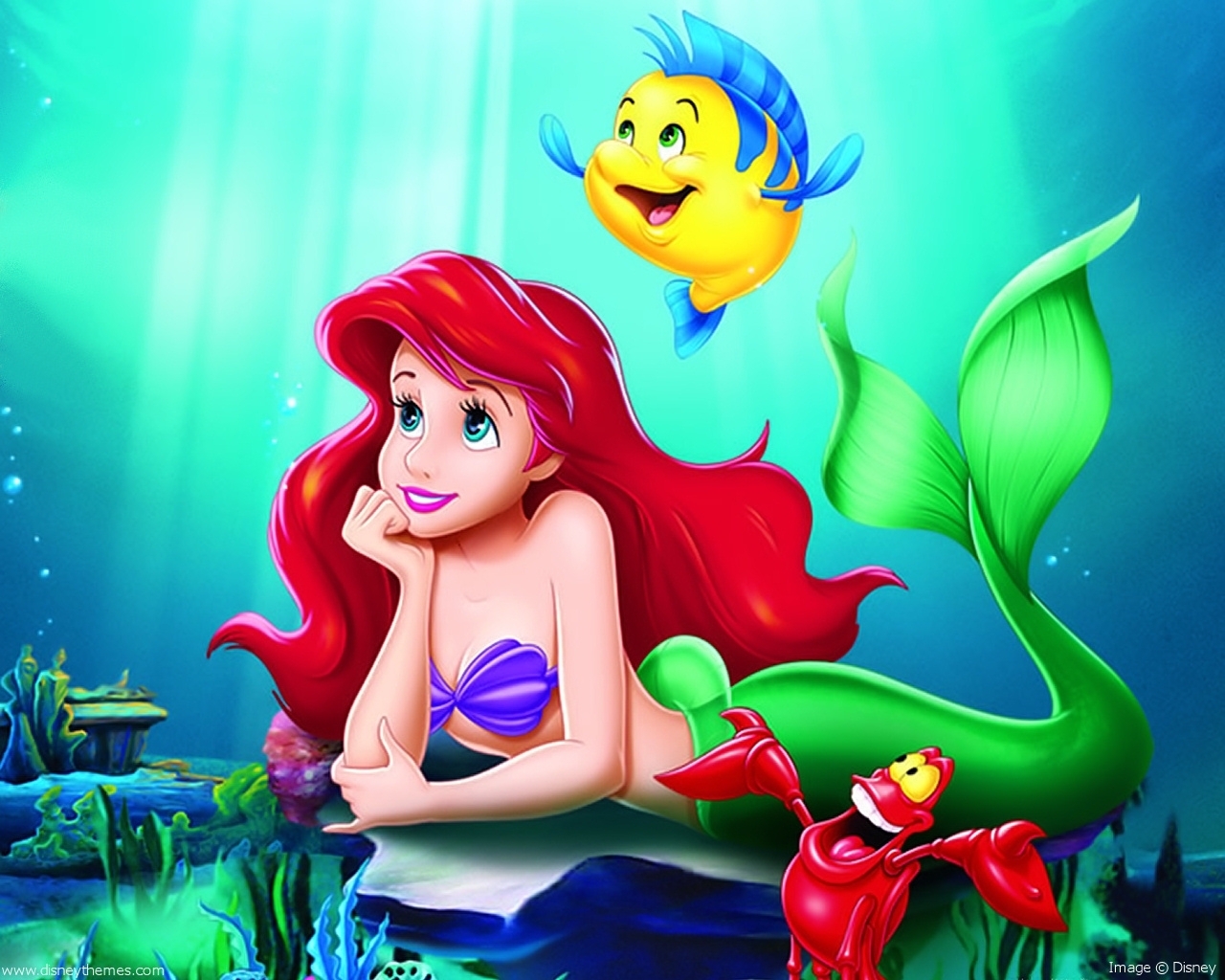
Does The Little Mermaid Still Retain the Magic? by Alisha Walton


In November of 1989 I went to a movie, un-chaperoned, with my friends, for the very first time.  The movie we watched was The Little Mermaid.  Disney had had a dry spell movie-wise, and this was the innovative new cartoon that was supposed to revitalize the franchise. And revitalize it it did.  It created a movie for the generations.

There were key things I will always remember about that first viewing.  I remember my heart swelling with the opening song.  I remember gasping in awe at the first merman to swim across the screen.  I sympathized with Ariel’s frustration with her father and my heart dropped to my stomach when she sang the line, “maybe on land they understand, bet they don’t reprimand their daughters.”  I daydreamed that I would kiss my crush doing something as romantic as the boat ride during the Kiss the Girl scene.  Lastly, I remember that I was okay with the ending.  

I had read the original story by Hans Christian Andersen, but I was okay with the Disneyfied ending.  I wanted a happy ending for myself.  I was a complete Geek/Nerd in a time when it was very unpopular to be so, and The Little Mermaid gave me hope.  I didn’t fit in with the world (school) I lived in; somewhere out there was a place for me.  Eventually I found that other world, met my prince, married him, and had children of my own.  


This year Disney released the 25th anniversary edition of The Little Mermaid.  I pre-ordered it, and when it arrived, I sat down with my boys, DJ age 4 and Dor age 18 months, to watch it.  What I experienced was a whole new magic.  I cannot adequately describe the beauty of watching children see something wonderful for the first time.  Both of their little jaws dropped when that merman swam across the screen.  It gave me a whole new set of fantastic memories.

It also gave me a whole new set of things to discuss, especially with DJ.  Like: why do mer-people have arms?  DJ refers to Flounder as “she”.  I almost corrected him, then realized that aside from the male voice, they never reference Flounder’s gender.  And Flounder is a fish, so how am I to know that DJ is wrong?  I kept my opinion to myself.

When King Triton lost his temper and began destroying Ariel’s treasure trove DJ declared, “That’s NOT ok!  Why is he doing that?!!”  This lead to a good conversation between us about communication and how some men, like King Triton, were never taught how to express their feelings in a constructive way.  We discussed the abuse of power and the need to protect your children.


Watching it with the boys I realized that Ariel did a lot of saving Erik.  Yes, Erik had one really good save of Ariel in the end.  However, Ariel outnumbered him on saves in that movie.  It made me smile that the movie was forward thinking enough not to go with the Damsel in Distress trope.

I haven’t talked much about Dor’s opinion of the movie.  I bought him an Ariel shirt.  He cried when we took it off him to wash it.  When he sees anything Ariel he brightly shouts, “Little Mermaid!”  That should give you an idea if he likes it or not.

Overall the film still retains the magic it had when it was first released.  It remains a Happily-Ever-After story that can be enjoyed and shared by different generations. I think about how it has brought me closer to my kids as we happily sing along with the soundtrack in the car.  My hope now is that I’m there to see DJ and Dor watch it with their children for the first time. 

Sunday, November 17, 2013

Episode 78: Dark Hollow!

Picture This week's Ace of Geeks podcast contains two reviews, as Mike and Jarys dig into Thor: The Dark World, and the new TV series Sleepy Hollow! Which dark-haired british mystery man makes Jarys' heart flutter more - Loki or Ichabod Crane? Also, we'll discuss our recent 24 hour video game marathon to raise money for charity, and dive into when, exactly, it's appropriate to kill your characters.

Episode 78!

Friday, November 15, 2013

Representation Matters- by Jarys


     There is a, now better known, story told that after the first season of the Original Series of Star Trek. The actress Nichelle Nichols, who played Lieutenant Uhura, planned to leave the show to pursue a career on the stage. When he heard of this, the civil rights leader Doctor Martin Luther King came to visit her in her studio one day to ask her to reconsider. He encouraged her to reconsider, saying that her role made Star Trek the only show on television in which Americans could see a black women in a position equal to that of a white person, respected for her expertise, and treated as an equal. Nichols later reported that King had called her role vital to young black people and young women all over the nation and that “once that door was opened by someone no one could ever close it again”. She decided to continue the role and Star Trek went on to conduct the writer Roddenberry’s vision of a future of greater equality for generations afterwards. Some female astronauts have credited Nichols as their inspiration, notably physicist Mae Jemison.

     Compare this to the role of Princess Leia Organa of Star Wars. Despite the sexist past of many of the tropes that surround and make up her character, actress Carrie Fisher succeeded in making the role powerful and commanding. In the original Star Wars film, Leia reverses her rescue attempt by Han Solo and Luke Skywalker, taking the vacant leadership role and rescuing them from their mistakes. The character’s conflicting romance with both characters is resolved by herself and her own choice. Throughout the films she is often shown as a lone voice of wisdom, a leader, and a warrior. Thanks to the commercial success of the film’s merchandising, Princess Leia action figures were among the earliest in American toys to depict a women in an action role. Recently, the actress Carrie Fisher revealed that Leia’s escape from Jabba’s slave chains was entirely her choice. Director George Lucas had left the resolution of Leia’s capture open and Carrie Fisher reports to have asked that Leia not be saved by anyone but herself, moreover, killing her enslaver with the chain restraining her.

     Representation is important in nerdy media and it is important to more than just the audience that is represented.

     Firstly, inclusion of oppressed groups and depicting their struggle, either directly or metaphorically, strengthens support of that struggle and helps privileged classes understand the suffering of that group. Class differences, once quite stark in America, still exist, but too often are only seen as the a graph or set of data. Instead, class and class conflict are made aware to young adults (and adult fans) through fictions such as Avatar: the Legend of Korra.


      I find the development of society within the Avatar universe between the Last Airbender Series and the legend of Korra series to be historically profound. In the Last Airbender, the world is set in a pre-industrial feudal/tribal social system. The three surviving nations are lead almost completely by royalty and a warrior aristocracy, most of whom are benders, just as our world was before the Enlightenment and Imperial eras. Class is cemented by the martial bending abilities. The only world leader who is not a bender is the Earth king, who is depicted as ineffectual and weak. However, in the Legend of Korra, society has undergone an industrial revolution, science and a single world government has made war less important. Industry and invention has made bending immaterial in gaining wealth, which is a far larger indicator of class than bending ability. This mirrors the class shift underwent by many countries in our own world; industrial and scientific advancement make the martial aristocracy less crucial in war and politics. The underprivileged classes struggle to be represented. This is shows as the Equalist movement in The Legend of Korra, a revolutionary group willing to use violence to make political advances for non benders in society. Though they are depicted as an antagonist group to the bending main characters, their points are consistently shown to be valid: non benders are bullied by the bending powers of the police, non benders are not given representation in the council of Republic City, and in the end (SPOILERS) their movement is shown to have led by a manipulative bender who cares nothing of their struggle. These storylines inspire audiences to reconsider their notions of good and evil, as antagonists are shown to be the victims of injustice, and bringing violence to them does not resolve the conflicts they represent. Scenes of non benders protesting and being beaten by the police mirror images on the news of Occupy protests. Depicting antagonists as victims of oppression offers privileged viewers the chance to identify those oppressed in their lives - people with whom the viewers would not normally identify.

      Representation of the underrepresented is also very important in inspiring members of those groups and including them in geeky/nerdy culture. I have already given an example of inspiration arising from including under represented characters, and I invite readers to fill the comments with their own stories. If we hold these stories to be true, we must have accepted that such inspiration is possible, but how is it possible? The answer, I believe, has a lot to do with depth. There are well rounded underrepresented characters, and then there are characters whose minority status is their only defining feature. Pacific Rim’s Morri Mako is a well rounded character, unique because of her experience and drive. Smurfette’s only defining feature, on the other hand, is that she is a woman. Such characters as Smurfette serve only to support the presumed non female audience’s external views of women, in the same way that the characters on “Meet the Jeffersons” often served only to support the presumed white audience’s external views on African Americans. (And the Big Bang Theory only exists to support stereotypes about us. -Ed) Such characters are not generally inspiring, they tell the people they represent to keep their head down, don’t challenge stereotypes, accept being an outsider. Deep and well-rounded characters give normalcy and sympathy, allowing these characters to inspire us with their heroic actions. Welcome to Night Vale’s Cecil may help homosexual fans feel safe and accepted, because the character is not defined by his homosexual feelings or relationship, and thus those parts of him are not shown as “other”.


     But to be accepted in the "Other" cultural group of nerds can be be very valuable. Too many of white, male, heterosexual, and Cis-gendered geeks take this inclusion for granted. (Just in case there's some of you out there who don't know this term, "Cis" means comfortable in the gender you were born with, basically. - Ed) Such folk have almost always felt a part, of this culture at least, and do not consider how our culture could be exclusive. Female, nonwhite, gay, and trans geeks are often excluded, especially by being underrepresented in Nerdy fiction. Full, rich, and three dimensional characters of these types counteract this exclusion in two contrasting ways. Firstly, these characters help underrepresented geeks feel welcome and accepted. Appropriately, the second reason is that these characters normalize such groups to “mainstream” geeks and influence the latter to accept the former. In essence, diversity and cohesion of deep and multi-faceted characters in media creates better acceptance and cohesion amongst audiences. This leads to a stronger social group in nerdom, better writing as audiences become creators, less infighting, and happier nerds.

     Finally, representation in geeky/nerdy media helps the “mainstream” understand the relationship they personally have with oppressed groups, as well as the advantages they enjoy as a member of the majority or non-oppressed group. This is often called “Checking your privilege”. When people understand the privileges they take for granted, it is easier to be aware of these factors as they relate to fellow geeks who cannot rely on these privileges. Those who do not understand privileges they enjoy do not see the systems that give them this privilege (such as white audiences having so many protagonists to which they can relate), and react negatively when those systems are challenged (such as when nonwhite protagonists become more popular). Because the power dynamics that divide us are so variable, it is rare to find someone who does not enjoy SOME privilege.


Rather, Privilege is when you are INCLINED to think thus, having no experiences to the opposite

     Being white, I enjoy considerable privilege, despite how liberal the area I live in is thought to be. Specifically, I live in a predominantly Asian neighborhood, where I am a minority. That minority status can provide disadvantages (such as getting servers attention in certain restaurants) but in most cases, my skin color puts me at an advantage. For instance, while walking down the street, no matter how crowded, if my Asian American neighbors can see me, they move out of my way. I just have to indicate where I intend to go, and they will yield to me. It’s incredibly frustrating, but I can’t very well blame them. People who look more like me than like them have made their lives difficult in this country for over a hundred and fifty years. Over time, I imagine, the laws, behavior, and assumptions of white people have made confrontation with white people not worth the effort for the ancestors of my neighbors, and that attitude may have been passed down culturally. The root causes are subject to research and debate, but the effect is quite real before me: I am given deference in my walking space because I am white. I point this out specifically, because I cannot say I would have noticed this for sure if this situation was not copied almost movement for movement in the books of my favorite author Terry Pratchett as he used fantasy races to model real world racial tension. The plight of nonhuman races in the predominately human city of Ank-Morpork, written as if they were real people and not forces of the environment with which the human protagonists much contend (as in certain fantasy books that shall go unnamed), broadened my thinking when I was younger. Other books depicting the disadvantages of characters that were not just like me in every way allowed me the insight to understand my own privileges.


     As flame wars and game room debates rage across geekdom over the bigoted nature of this or that comic book, the racist depiction in such and such movie, and/or the sexism inherent in myriad industries, further awareness can only help ease these tensions and resolve factions. Representation of underrepresented groups in nerdy media does wonders to bring this awareness, as oppression and the struggle against oppression is revealed in these works. Self-awareness and actualization can be achieved by geeks excluded for their various outsider statuses as they are inspired and given confidence through new role models.  Conversely, those on the other side of the divide are given avenues to sympathize with and understand their counterparts through exposure to these characters. Such characters are not only important, but are important to me and have changed my mindset completely.